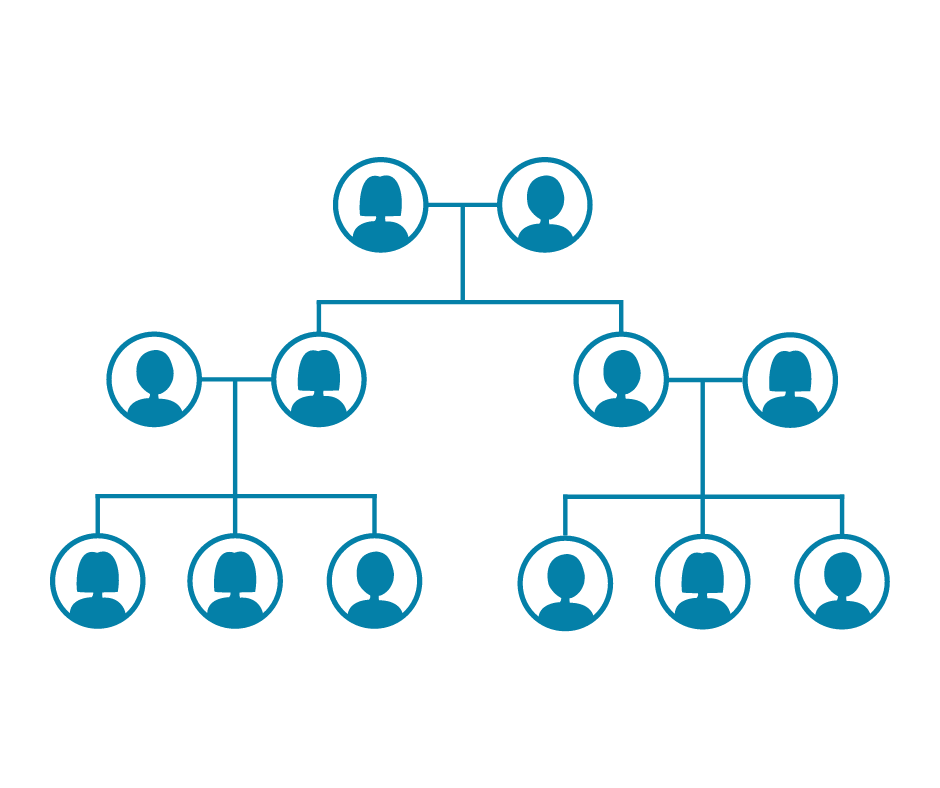
I’ve been working on my family tree for longer than I’ve been a copyeditor – I started on it in the mid-1980s, twenty years before I launched myself into the world as a freelance copyeditor. I’ve often mused about what points of connection there are between genealogy and the editorial approach, and here are the results of that musing (egged on by Hazel Bird, a fellow editor and genealogist, and one who has actually got as far as writing up her family history).
Know your stuff, part 1
I did training with the Society of Genealogists and the Institute of Heraldic and Genealogical Studies, and I read the various books and magazines that were around then, and I still do. When I started, there was no Find My Past, no Ancestry.
Research meant going to libraries and archives, and using the various digests that were starting to appear of what records might be found where, and making myself seasick scrolling through microfilm of the census returns in the basement of the Public Record Office in Chancery Lane, long before it transmogrified into The National Archives and moved to Kew. Fortunately I was working in the Royal Courts of Justice for a while, next door to St Catherine’s House, then home of the General Register Office and was able to get half an hour with those huge tomes of indexes each morning before going to my office.
Key lessons were:
- work from the known to the unknown, so start with yourself and work back up your tree for your ancestors, and outwards to aunts, uncles and cousins and go where the facts take you. You don’t pick a famous person that family legend says is your nth-great-grandpa and trace their children down;
- remove red herrings. The big one is to check for deaths in infancy before grabbing on to someone of the right name and tracing the wrong family;
- verify, verify, verify. It can be hard – or impossible, the further you go back – but certainly in the more recent records try to get at least two sources for each connection you make;
- be imaginative – what other spellings of a name could you look at? If you hit a brick wall, what ways round it could you explore? Sometimes the solution comes with time – new batches of records are digitised and made available via one of the big genealogy websites;
- join the relevant societies for information and support (as I was typing this sentence, an email arrived from the Derbyshire Family History Society https://www.dfhs.org.uk/ with the dates of their next three talks).
So training – education if you prefer – was essential if you were going to make a trip to a county records office some distance away. You had to be very sure that they held the records you were looking for.
You had to know who to write a letter to (yes, I started before email became anything close to common), or phone, and what to ask, or you could spend a lot of time and money on pointless visits and get nowhere with your research.
You might engage a local researcher to save yourself the travel, but you still needed to be sure that no wild geese were about to be chased.
Editorial equivalent
1 Join your national editorial organisation, if you have one (Chartered Institute of Editing and Proofreading, obviously, in the UK, which has a large international membership). If there isn’t one, find one elsewhere that covers the language(s) you edit in. Take part in discussions, use the education opportunities and explore its resources.
2 Train: none of us know what we don’t know, so be prepared to find out there’s quite a lot more you could usefully know for the benefit of your clients, in terms of quality of work, and for your own benefit, in terms of efficiency of working.
3 Lay the groundwork properly.
4 Keep up to date with new developments in your field.
5 Learn how to use specialist software and get very familiar research sites, especially their search functions.
Know your stuff, part 2
The very biggest lesson from genealogy that applies to the editorial life is, of course, be methodical. Don’t leap around, make sure of your ground before moving to the next step. Check your records for inconsistencies, typos, gaps, ambiguities and (gasp!) outright mistakes.
Editorial equivalent
1 Master your tools: learn how to use Word well, to use styles and macros, and to use wildcard Find & Replace and plenty of other efficiencies to produce better quality at a faster speed.
2 Develop efficient working practices and make good use of checklists, of which I’m very fond.
Good lessons to learn
- Deal with working with a lot of detail and still see the bigger picture.
- Fuel your curiosity and acquisition of general knowledge – you never know what will come in useful, just as much in genealogy as in editing. Learning about the social history that applies to your forebears helps to set your research in context. It’s called family history not family cataloguing, after all!
- Be accurate: check for typos, especially in dates, and vow never to write an all-digit date ever again!
- Be focused and diligent.
- Hone your Spidey-senses. Do you trust what you just found, or is it actually possible it’s the wrong family? Or a deliberate cover-up of something common now but shameful then?
- Accept the unpleasant alongside the lovely – if an ancestor (or someone on a collateral line – I’m not fussy) did something a bit dodgy, or did something decidedly cruel, you have to learn to take it.
- Be persistent. I started looking for my 4xgt grandfather’s baptism around 1988. I found it in 2021, 140 miles from where I’d been looking. I thank and thank again the 1770s vicar who added an unusual amount of detail to the parish register that made it certain I’d found the right child. (The search for Samuel led to me becoming, for several years, a member of the Guild of One Name Studies for my surname, so much detail had I amassed.)
- And then of course, there’s the biggie: how to spell ‘geneAlogy’ correctly. No, it’s not ‘geneOlogy’ no matter how you hear it pronounced on family history TV programmes, which makes me wince every time! [That’s enough peeving—Ed.]
Editorial equivalent
1 Context is all! Ask an editor a question on whether something is right or wrong and you’ll almost certainly be told ‘it depends’. It depends on the context.
2 Work out what the job actually is: ensure you’ve understood what you’re getting into for every job so you deliver the brief – or clarify the brief when it’s a bit wonky.
3 Learn to accept valid criticism and grow into a better editor or proofreader.
4 Learn to concentrate, and when to take breaks to be able to maintain a high level of application to the job in hand.
5 Trust those Spidey-senses if something strikes you as a bit off – and follow up. You could save your author, and yourself, from a big lump of embarrassment.
6 Check for your own typos: the biggest no-no is introducing errors into a manuscript!
7 Write good handover documentation: remember my lovely 1770s vicar!
8 If you don’t know, look it up. If you think you do know, look it up anyway (*cough*, genealogy, *cough*).
Bad lessons: beware!
The biggest lesson to resist for editorial purposes is being comfortable about never being finished, going over old ground time and again to see if you spot something new (or something new has been made available). That’s a lousy lesson to take on board as an editor or proofreader.
Editorial counterposition
1 Know when to stop and declare the work done. No such line exists in the genealogical world when you’re working on your own tree for your own pleasure. If you’re a professional genealogist then you definitely do have to know when to stop: it’s not your money you’re spending!
2 Accept that perfection is accidental and fleeting. Work on being excellent, and that will do.
3 Get up and away from your desk periodically. When your hobby is genealogy, it tends to tie you to your desk even during breaks! Find reasons to get up and move.
Synergies
I believe there are far more synergies between the editorial and genealogical worlds (and, indeed between the authorial and genealogical worlds) than not, including:
- dealing with a mass of material
- making sense of things and putting them in the right order
- discerning what is missing
- knowing where to go to fill gaps
- having highly developed research skills and
- coming at things from different angles to find a solution rather than grabbing at the first and most obvious no matter what.
And with that, I’m off to spend another couple of hours flexing my research skills on my family tree.

I so much enjoyed reading this, Sue. Such a lot of interesting connections (and instances where lessons should *not* be learned!). The ‘Spidey-senses’ point is a big one for me – in both geneAlogy and editing, those little inklings (usually stemming from experience) can be so important.
Many thanks, Hazel! I wouldn’t have got around to committing myself to paper (well, pixels) without your encouragement! Yep – Spidey-senses are big for me, too: when something just tickles at the edge of your consciousness with an ‘oh, really??’ Is that actually right? I thought it was useful to remember that not every practice is transferable. Genealogical mindsets are great, but not everything is applicable in all contexts!